![Snake Bites, Strikes & Constricting — Oh My! [Danger]](https://reptiera.com/wp-content/uploads/2026/06/ChatGPT-Image-Jun-14-2026-12_24_10-AM-1-1280x640.jpg)
Two of the most common human fears are snake bites and spiders. But why do so many people react strongly to them? In my experience, most people fear one more than the other. For some, the difference is small. For others, it can feel like the difference between curiosity and a real phobia.
For example, I feel comfortable around nonvenomous snakes. However, if someone came near me with a spider, I would probably panic. That may sound dramatic, but many people can relate to this kind of fear.
When it comes to snakes, the fear usually comes from two main concerns: snake bites and constriction.
Understanding Snake Behavior
Snakes are not highly intelligent animals. While some species may show more awareness than others, most snakes act mainly through instinct, survival behavior, and basic biological responses. They do not bite because they are evil or aggressive for no reason. Most of the time, a snake reacts because it feels threatened, hungry, stressed, or confused.
Bite vs. Strike
Many snake keepers are often asked, “Has your snake ever bitten you?”
The answer is usually yes. However, a snake bite is not always as serious as people imagine. In many cases, especially with nonvenomous snakes, the wound is small and heals quickly. The pain depends on the snake’s size, species, and the reason behind the bite.
A bite often happens when a snake mistakes a hand for food or feels unsafe. A strike, on the other hand, is usually a quick defensive movement. Understanding the difference between a feeding response, a defensive strike, and a normal snake bite helps people see snake behavior more clearly and with less fear.
Why Snakes Bite or Strike
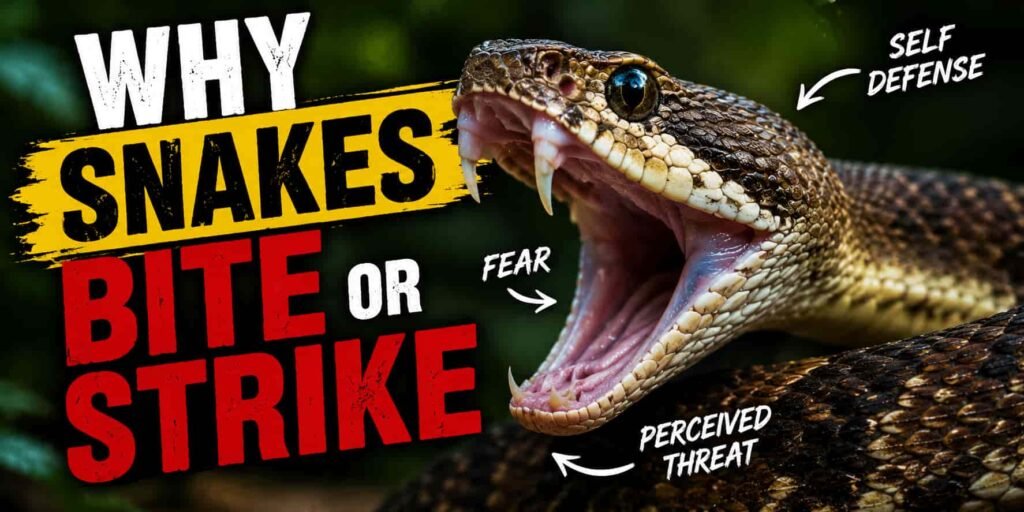
When a snake bites or strikes at a person, it usually happens because the snake has misunderstood the situation. Snakes do not attack humans for revenge or anger. Their actions are mostly based on instinct, survival behavior, fear response, or feeding response.
A bite usually happens when the snake thinks something is food. This is called a feeding response. The snake may hold on with its teeth and, if it is a constrictor, it may try to wrap around the area.
A strike is different. It is usually a defensive response. This happens when the snake feels scared, threatened, or trapped. A strike is often quick, with the snake biting and letting go immediately. It is the snake’s way of saying, “Move away from my space.”
Understanding the difference between a snake bite, defensive strike, feeding response, and constriction can help people react more calmly and safely around snakes.
Read Also: Why Do Leopard Geckos Chirp: What Are They Saying?What to Do If Your Snake Bites You
If your snake bites you, the first thing to do is stay calm. A calm response helps you handle the situation safely and prevents the snake from holding on longer.
Do not hurt the snake or pull it forcefully. Pulling the tail, crushing the head, or panicking may make the bite worse. Most nonvenomous snake bites are not serious, but they still need proper care.
If the snake does not release quickly, use a strong-smelling liquid such as rubbing alcohol near the snake’s mouth. This can encourage the snake to let go. After that, clean the wound properly with disinfectant and apply an antibacterial ointment. If the bite is deep, painful, swollen, or from a venomous snake, get medical help immediately.
Understanding Constriction Behavior
Large snakes can be dangerous if they are handled carelessly. However, snakes do not attack people for fun or revenge. Their behavior is based on instinct, feeding, defense, and self-protection.
When a snake wraps around your arm, shoulder, neck, or body, it is not always trying to harm you. Many snakes use their bodies for support because they do not have hands. In the wild, they wrap around branches to stay balanced. When handled, they may use a person’s body as an anchor.
If you try to remove the snake too quickly, its grip may tighten. The safest way to remove a snake is to start from the tail, because the tail is usually the weakest and easiest part to unwrap. This helps protect both the handler and the snake from injury.
Safe Handling Rules for Snake Keepers
To reduce accidents, avoid handling large snakes alone. Small snakes under four feet are usually easier for an adult to manage, but children should never handle snakes without adult supervision.
Another important safety rule is to keep all snake enclosures securely closed. Use strong latches or locks if needed. A secure enclosure prevents escapes and keeps both the snake and people safe.
By following proper snake safety, handling techniques, bite prevention, and enclosure security, you can become a more responsible snake keeper. And if snakes still make you uncomfortable, that is completely normal. Everyone has animals they prefer to admire from a distance.
Final Thoughts
Fear of snakes is very common, and in many cases, it comes from misunderstanding their behavior. Snakes do not bite, strike, or constrict because they are evil or looking for revenge. Most of their actions are based on instinct, fear, defense, feeding response, and survival.By learning the difference between a bite, a defensive strike, and constriction behavior, people can understand snakes more calmly and safely. Responsible handling, secure enclosures, and proper safety rules are important for every snake keeper.In the end, snakes are powerful and fascinating animals, but they deserve respect. You do not have to love them, but understanding them can help reduce fear and prevent accidents.
FAQs: Snake Bites, Strikes & Constricting — Oh My! [Danger]
What is the famous quote about a snake biting you?
The famous snake bite quote means that when someone hurts you, you should focus on healing, self-protection, and moving forward instead of wasting energy asking why they hurt you. It teaches emotional strength, self-care, and letting go.
What does it mean when a snake strikes?
A snake strike is usually a defensive reaction, not an attack for food. It happens when the snake feels afraid, threatened, or trapped. The snake may bite quickly and release to warn you to move away. A feeding bite is different because the snake may hold on and, in constrictor snakes, may try to wrap around the area.
Do constricting snakes bite?
Yes, constricting snakes can bite. They use small, sharp, backward-curved teeth to hold their prey before wrapping around it. They may also bite as a defensive response if they feel threatened, or as a feeding response if they mistake a hand for food.
What is “snake bite” slang for?
In slang, snake bite or snakebit means being very unlucky or facing repeated bad luck. It is often used in sports, work, or daily life when a person or team keeps experiencing misfortune, failure, or unlucky events.
What is a silent killer snake?
A silent killer snake often refers to the Common Krait, a highly venomous snake known for its quiet movement and nocturnal behavior. It is one of India’s Big Four snakes and is feared because its potent venom can be dangerous if a bite is not treated quickly.
![Things Reptile Owners Hate Hearing [Shocking]](https://reptiera.com/wp-content/uploads/2026/06/ChatGPT-Image-Jun-14-2026-12_50_49-AM-440x264.jpg)